
The Climate Debt We Can't Ignore

The daily wage earner in Mumbai faces a choice that encapsulates one of the most vexing challenges of our time. At the end of a long day at a sub-urban grocery shop, a cashier offers him two options: a free plastic bag that will outlast his grandchildren, or an eco-friendly alternative that costs extra, money he doesn't have.
His choice is obvious, and it reveals a fundamental truth about the climate crisis: survival trumps sustainability when you're living hand to mouth. While environmentalists in wealthy nations debate carbon footprints and sustainable living, billions of people around the world are focused on a more immediate concern—making it through the day.
This is the uncomfortable reality at the heart of global climate action. The very people who contributed least to climate change are often those least able to participate in the solutions. And until we reckon with this inequality, our efforts to save the planet will continue to fall short.
The Ghosts of Empire
To understand why climate action feels so fractured, we need to travel back in time. The smokestacks of Manchester, the cotton mills of New England, the coal mines of the Ruhr Valley—these were the engines of the Industrial Revolution that built the modern world. They also began pumping unprecedented amounts of carbon into the atmosphere, setting Earth on a collision course with climate catastrophe.
But here's what the standard telling of this story often omits: the wealth that funded those smokestacks didn't emerge from thin air. It was extracted from colonies across Asia, Africa, and the Americas through centuries of systematic exploitation. European powers didn't just take gold and spices, they restructured entire economies to serve their needs, often at gunpoint.
The numbers tell a stark story. From the dawn of the industrial age through 2017, the Global North—North America, Europe, and Oceania pumped out more than 63% of all carbon emissions. Meanwhile, the Global South, home to 85% of the world's population, contributed a fraction of the pollution but will bear the brunt of its consequences.
This isn't ancient history. In Bangladesh, rising sea levels threaten to displace 20 million people by 2050. In Sub-Saharan Africa, changing rainfall patterns are making farming, the livelihood of two-thirds of the population increasingly precarious. Small island nations face complete submersion. The cruel irony is impossible to ignore: those who did the least to cause the problem suffer the most from its effects.
With this inequality remaining unsettled, the chances of all nations contributing to sustainable targets remain a pipe dream.
The Reparations We Don't Talk About
The idea of climate reparations makes many people uncomfortable, especially in wealthy countries. It sounds expensive, complicated, and politically fraught. But consider this: we already have precedent for addressing historical wrongs on a massive scale.
After World War II, West Germany paid billions in reparations to Holocaust survivors and Israel. The payments continued for decades, totalling hundreds of billions in today's dollars. More recently, Germany agreed to provide €1.1 billion to Namibia over 30 years as acknowledgment of colonial-era genocide though it carefully avoided calling this "reparations," framing it instead as development aid.
These examples prove that large-scale historical redress is possible. Yet when it comes to the far more extensive damage of colonialism and climate change, the response has been token gestures and broken promises.
Take the famous $100 billion climate pledge. In 2009, wealthy nations promised to provide $100 billion annually by 2020 to help developing countries adapt to climate change and transition to clean energy. More than a decade later, that promise remains largely unfulfilled. Even if it were met, $100 billion is a pittance compared to the estimated trillions needed for climate adaptation and mitigation worldwide.
The figure wasn't calculated based on actual needs or historical responsibility—it was simply a round number that sounded substantial in a press release. It's the equivalent of a billionaire offering loose change as compensation after burning down someone's house.
The Math of Responsibility
Determining fair climate responsibility isn't as impossible as it might seem. Climate scientists can calculate historical emissions with remarkable precision. Economists can model the benefits that early industrialisers gained from unrestricted carbon pollution. The tools exist to apportion responsibility fairly.
One approach focuses on "carbon debt", the idea that every country has a fair share of the atmosphere's capacity to absorb carbon. Countries that exceeded their share owe the remainder to countries that stayed under their allocation. Another method calculates reparations based on the economic benefits derived from historical emissions, much like calculating damages in a court case.
Under any reasonable calculation, the climate debt runs into the trillions. This isn't money that would disappear into a void, it would fund the massive clean energy transition that needs to happen anyway. Solar farms in Sub-Saharan Africa, wind turbines in Latin America, flood defences in Bangladesh, these investments would simultaneously address climate change and historical inequality.
The Path Forward
Climate justice isn't just a moral imperative, it's a practical necessity. The countries most affected by climate change are also among the fastest-growing sources of emissions.
Without massive support for clean development pathways, these countries will take the same carbon-intensive route that wealthy nations took centuries ago. The result would be catastrophic for global emissions and climate stability. But here's the opportunity: the clean energy revolution has made sustainable development cheaper and more accessible than ever before. Solar power is now the cheapest form of electricity in most of the world. Electric vehicles are rapidly approaching price parity with gas cars. With the right financing and technology transfer, developing countries could leapfrog the carbon-intensive development path entirely.
This requires more than charity, it requires justice. Wealthy nations need to acknowledge their historical responsibility and pay their fair share of the transition. This means real money, not just pledges. It means technology transfer without patent restrictions. It means treating developing nations as equal partners in climate negotiations, not supplicants.
A Reckoning Long Overdue
The window for limiting global warming to relatively safe levels is rapidly closing. We need to cut emissions by half within this decade and reach net zero by mid-century. This is an unprecedented challenge that requires unprecedented cooperation.
That cooperation will remain elusive as long as climate action is seen as the priority of wealthy elites imposing costs on everyone else. The daily wage earner in Mumbai won't choose the expensive eco-friendly bag until his basic needs are met. Bangladesh won't prioritise emissions cuts while its people face displacement from rising seas.
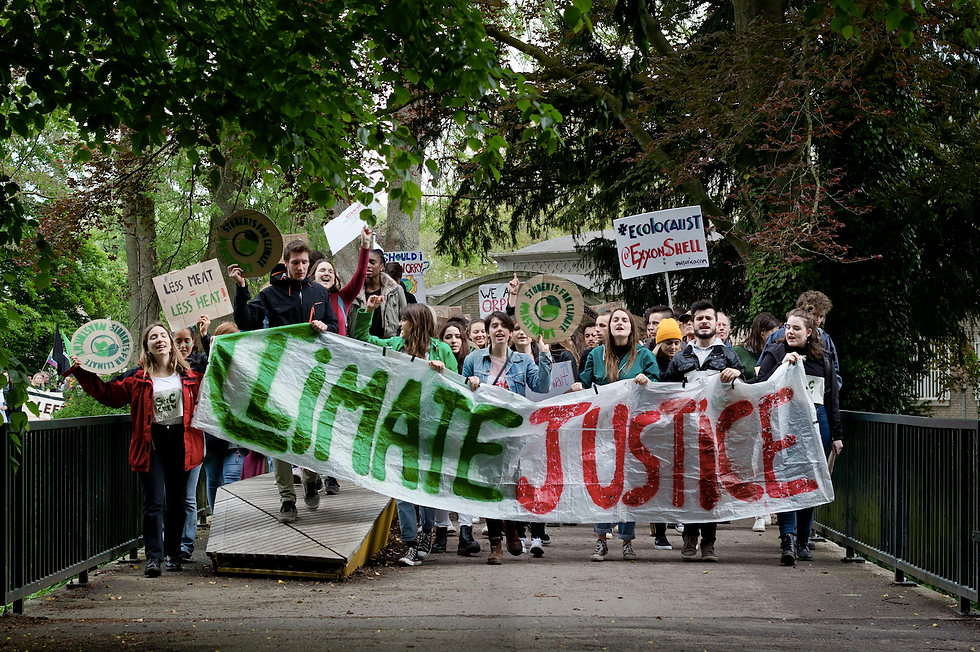
Climate justice offers a different path, one that acknowledges the real sources of our climate crisis and charts a course toward solutions that work for everyone. It recognises that the fight against climate change and the fight against inequality are not separate battles, but two fronts in the same war.
The debts of history cannot be repaid overnight, but they cannot be ignored forever. The choice we face is simple: continue with business as usual and watch the planet burn while inequality deepens, or embrace climate justice as the foundation for a sustainable future.
The daily wage earner shouldn't have to choose between feeding his family and protecting the planet. With climate justice, he won't have to.


Comments